Last updated November 17, 2026



Free written scope consultation - allowances, timeline, and change-order rules on paper before a single trade is scheduled
Driveway & Pavers Maintenance Schedule: What to Do and When
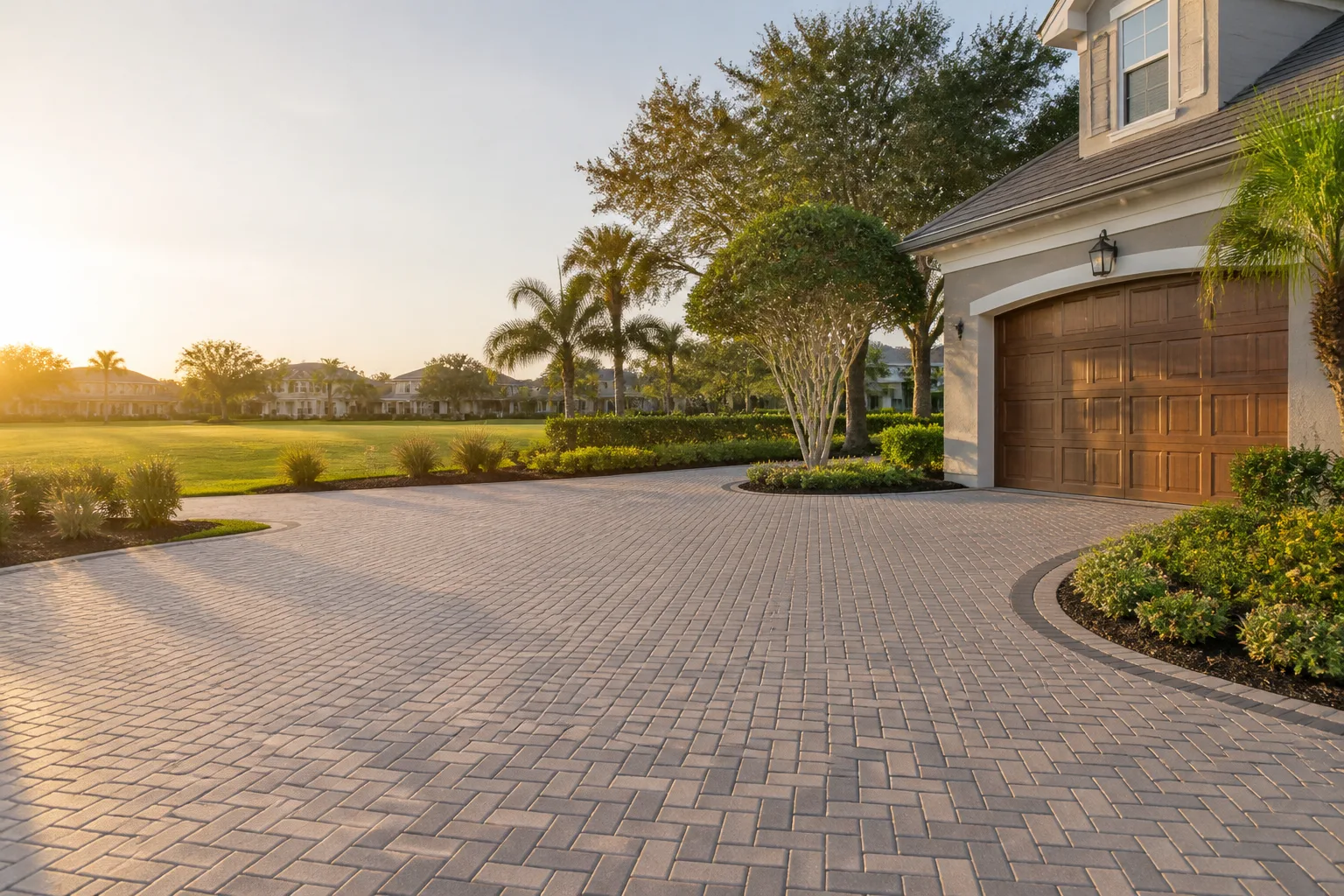
Polymeric sand doesn’t last forever. And in Fremont, what breaks it down fastest isn’t rain. It’s the dry fall wind events that pull moisture out of the joints, shrink the sand, and open up the tiny gaps that ants and weeds find before you do. Most homeowners discover this the hard way in late October, when a line of ants starts marching across the driveway and the pavers suddenly look loose. A paver driveway can hit 30 years or more with the right upkeep. Skip one task at the wrong time of year and you can cut that lifespan to 12. That’s the whole reason this schedule exists. It’s the same calendar Barrett & Sons Construction Fremont uses to keep paver driveways, patios, and walkways standing up to Fremont’s alkaline water and dry-season swing. Read on and you’ll know what to check each month, when sealing helps, and when sealing makes things worse.
Styles & brands we work with
- Kitchen remodeling
- Bathroom remodeling
- Home additions & ADU
- Roofing
- Windows & doors
- Driveway & pavers
- Fence
Quick Answer
Refresh polymeric sand about every two to three years (sooner in high-traffic zones), seal every three to five years only after the joints are fully topped off and stable, and do a two-minute walkthrough after every significant rain to catch drainage problems before they dig into your base. Because Fremont runs on a dry May-to-October season and a wet November-to-April one, the actual work doesn’t spread evenly across twelve months. Most of it lands in two narrow windows: late dry season for sealing, and early wet season for post-storm checks.
Table of Contents
- Your Fremont Paver Maintenance Calendar, Month by Month
- How Often Do Polymeric Sand Joints Actually Need Refreshing?
- When to Seal (and When Sealing Is the Wrong Move)
- The Two-Minute Post-Storm Walkthrough
- What Fremont’s Alkaline Water Does to Paver Joints
- Why We Photograph Pavers Twice a Year (And Why You Should Too)
- Small Repairs You Can Handle and Larger Ones You Shouldn’t
- Common Mistakes to Avoid
- When to Call a Professional
- Frequently Asked Questions
Your Fremont Paver Maintenance Calendar, Month by Month
Most maintenance guides assume four seasons. Fremont doesn’t work that way. We get a long dry stretch that runs roughly May to October and a wet stretch that hits from November through April, with the sharpest rain in December, January, and February to land right on the pavement. That means fall is not “leaf-cleanup month” the way it is in colder states. Fall in Fremont is prep season, the moment to get everything buttoned up before the first good soaker.
Here’s how the year breaks down for a paver driveway in Fremont:
- January through March (peak rain): Walk the driveway after every big storm. Watch for water pooling along the edges and for dirt washing out at the low point. Don’t sweep aggressively here; the joints are swollen with moisture and the sand is most likely to come out.
- April: Dry-out month. Once the rain quits, sweep off loose grit and inspect joints for thin spots. This is when winter damage first becomes visible.
- May and June: Refresh polymeric sand in damaged or low joints. If you’re sealing this year, this is your window. Sealing needs a clean, dry paver surface and three or four dry days to cure. Fremont’s pre-summer stretch usually gives you that.
- July and August: Hold off on new sand in high-sun, high-heat weeks. Do a visual inspection, pull a few weeds, and check for any pavers that rock or wobble when you walk on them.
- September and October (wind season): The fall wind events in Fremont are what chew up joint sand. Sweep the joints every couple of weeks, top off any thin spots with fresh sand, and photograph the driveway for your records.
- November and December: Back into wet season. Clear gutter downspouts and any surface drains near the driveway so water actually leaves when it should. Do your first post-storm walkthrough once the rain starts.
For a broader look at what we build and repair on paver driveways across Fremont, see our Driveway & Pavers in Fremont page. The schedule above assumes a standard interlocking paver installation with proper base compaction. If you have a different paver style or a very old driveway, the timing will shift a bit.
How Often Do Polymeric Sand Joints Actually Need Refreshing?
In the Bay Area, most paver driveways need polymeric sand refreshed every two to three years, with high-traffic zones (the apron at the garage door, the wheel path into the driveway, and the first few feet off the street) needing a touch-up closer to 18 months. The typical national guidance of “three to five years” is optimistic here because of that dry-season wind cycle and because Fremont’s water is hard.
Polymeric sand is not a lifetime product. It’s a flexible binder that holds pavers in place, keeps out ants and weeds, and channels surface water into the joints rather than through them. Sitting in the sun for six months of the year with no rain, it loses moisture, shrinks inside the joint, and starts developing hairline cracks. A wind event blows in loose soil, grit, and seed, and the joint opens further. Once that happens, you’re not just dealing with weeds. You’re dealing with a joint that pushes water sideways instead of down, and that can soften the base underneath.
How to tell whether it’s time to refresh:
- You can see sand sitting 1/4 inch or more below the paver surface inside the joints.
- Ants have started working the joints in more than one spot.
- Weeds are regrowing where you pulled them last year.
- Your shoes kick up loose granules when you walk the driveway.
- Water sits in a joint during a rain, which tells you it’s packed, not draining.
If any three of those describe your driveway, plan on sand within the next dry window. It’s the least expensive maintenance item on this whole list. It’s also the one that prevents the most expensive problems.
When to Seal (and When Sealing Is the Wrong Move)
Seal a paver driveway in Fremont every three to five years, in the late spring or early summer window after the joints have been topped off, in dry weather with three to four days to cure. Don’t seal on top of a compromised joint. Sealant locks in whatever is underneath it, and if that’s a half-empty joint, you’ve just glued a drainage problem into place. The sealant beads over the failing joint, water still finds its way in, and now you have a repair that costs more because the surface has to be stripped first.
The seal decision comes down to joint condition, not the calendar. Ask these two questions first:
- Is the sand at surface level in every joint? If not, top it off first. Sealant needs the joint to be full and firm. Refill with fresh polymeric sand, mist it to set, and let it cure according to the product instructions before considering sealant.
- Is the paver surface dry and clean? Sealing over moisture or embedded soil traps both under the film. The result looks milky, and it wears off unevenly.
If either answer is no, postpone. And skip sealing entirely in the fall. A film-forming sealant laid down in October in Fremont is at risk of moisture intrusion during the wet season because the product hasn’t fully cured. Late spring and early summer are always safer.
Sealing isn’t for every paver, either. Some concrete pavers are designed to breathe and don’t benefit from film-forming sealers. If you’re unsure what you have, ask before you buy a bucket. On premium hardscape lines the material specs are on record, and if the pavers are Belgard or Techo-Bloc the manufacturer’s guidance usually answers the question directly. If you’ve got that install on a driveway with a base issue under it, our Driveway & Pavers in Fremont service guide walks through how we diagnose base failures versus surface wear.
The Two-Minute Post-Storm Walkthrough
The most valuable paver maintenance habit costs you two minutes. After every significant rain in Fremont, walk the perimeter of your driveway and look for three things. Water pooling anywhere it didn’t pool last season. Gravel or soil pushed onto the driveway from the yard or planting beds. And any sand sitting on top of the pavers where it clearly washed out of a joint. Those three signs tell you whether the drainage on your property has shifted.
Here’s the walkthrough, step by step:
- Stand at the street end and look up. Water flows away from the house and toward the street on a properly graded driveway. If water is puddling in the middle, or worse, running back toward the garage, the grade has changed somewhere.
- Check the edges. Polymeric sand along the paver edges gets scoured first during heavy rain. Loose pavers, missing sand, and exposed base material at edges are all early warnings.
- Look at the downspouts and surface drains. Water from the roof that used to leave the property can sheet across the driveway if a downspout has come loose or an extension has slipped. That’s a five-minute fix before it’s a base repair.
What you’re catching in that two-minute check is drainage diversion. A driveway doesn’t fail because it got wet one time. It fails because water started going where it wasn’t supposed to, season after season, until the base under one section washed out. Catch it in fall and it’s a repair. Miss it through two winters and it’s a rebuild of a section.
What Fremont’s Alkaline Water Does to Paver Joints
Fremont’s municipal water runs on the harder, more alkaline side, and that matters for how often your joint sand needs refreshing. Hard water leaves mineral deposits. On a paver surface, those deposits show up as a whitish haze, called efflorescence, that can be mistaken for a failing sealer. On the joints, hard water can accelerate the breakdown of polymeric binders and leave visible mineral residue after every rain. It also complicates cleaning, because acidic or aggressive cleaners will attack some pavers and not others.
What that means for maintenance in this specific city:
- Expect efflorescence on new pavers in the first season. It’s a normal chemical reaction, not a defect. Most of it burns off with weather and a soft brush.
- Top off joint sand a little more often than the national guidance suggests because hard water degrades the binder faster than soft water does.
- Use a gentle, paver-specific cleaner. Off-the-shelf acidic cleaners can etch the surface, especially on newer concrete pavers.
- When you do refresh the sand, wet the joints down with the same city water you’re going to see all year. That keeps the product from reacting differently than it will in real conditions.
If you have a paver driveway in Fremont with more than one efflorescence patch, it’s usually a sign of moisture movement through the base, not just a hard-water deposit. That’s a case for an inspection rather than a scrubbing brush.
Why We Photograph Pavers Twice a Year (And Why You Should Too)
Take dated photos of your driveway twice a year, in April (right after the wet season) and in October (right before it). Get wide shots of every edge, close-ups of joints in three or four spots, and a shot of the low point where water collects. Two reasons: it gives you a baseline for comparison, and it gives you evidence if you ever need to file a claim under a workmanship warranty or manufacturer warranty.
A paver driveway is a large enough investment that documentation isn’t overkill. It’s the same principle we follow on every job. Every scope, every allowance, every price change is written down before work happens, because the paper trail is what stands up later. If we did the paver install, the 90-Day Done Right Promise is on the contract and the photos make the claim process clean. If a different contractor did the install, those photos are the only record you have of what the driveway looked like before it started shifting.
Full documentation is one of the reasons our Barrett & Sons Construction Fremont team shows up on site for the whole job, not on day one and never again. The same standard applies to our work next to the driveway: if you have a fence along the edge of the pavers, the schedule overlap matters, and you can read more on our Fence Installation in Fremont page. And if the pavers are part of a larger remodel, including a new driveway leading up to an addition, our Home Additions & ADU in Fremont page covers how we coordinate those schedules.
Small Repairs You Can Handle and Larger Ones You Shouldn’t
Some paver maintenance is genuinely a DIY job. Pulling weeds, sweeping joints, touching up sand, and keeping downspouts clear are all things that take an afternoon and cost less than a trip to the hardware store. Others aren’t, and it usually comes down to what’s happening under the surface.
Things you can handle yourself:
- Sweeping and rinsing the pavers. Soft brush only.
- Refilling joints with fresh polymeric sand in low or damaged areas during a dry window.
- Weeding the joints with a weeding tool and following up with a light sand top-off.
- Clearing downspouts, gutters, and surface drains near the driveway.
- Replacing a single popped-out paver if the joint and base behind it are intact.
Things to have us look at, or another professional, before you touch them:
- Any paver that rocks when walked on. That points to a base issue.
- Paving that’s sunken or heaved in one area, particularly where the driveway meets the garage or street.
- Repeated pooling in the same spot after every rain.
- Water running into the garage after a storm.
- Any repair that requires lifting more than two or three pavers, because the interlock has to be re-established or the repair will keep failing.
If the paver driveway is adjacent to a window or door that water is now reaching, or the same drainage issue is affecting the house, that’s a job for someone with eyes on the whole property. Fremont crews we work with see plenty of these, and the fix is often a bit of regrading plus a properly tied-in drain, not a full paver replacement.
Common Mistakes to Avoid
- Sealing on top of compromised joint sand. The single most expensive mistake on this list. Sealant locks in the failure and the repair gets big and ugly. Top off first, seal second.
- Sealing in the fall. A film-forming sealer laid down in October in Fremont hasn’t had time to fully cure before the first hard rain. Late spring is the safe window.
- Skipping sand refresh after the first winter. This is the one task that separates a 30-year driveway from a 12-year problem. Skipping it because the driveway “looks fine” lets joints open up and water start working into the base.
- Pressure washing hard and close. The right approach is a gentle surface rinse, not blasting at close range. High-pressure washing scours out polymeric sand and, over time, kicks pavers loose.
- Letting downspouts run onto the driveway. Downspout extensions are inexpensive. Water sheets and finds a low point, and that low point becomes a base failure two winters later.
- Using the wrong cleaner. Acidic cleaners etch concrete pavers and strip sealant. Hard water and hard water residue are best handled with a paver-specific cleaner made for the material you actually have.
- Never photographing anything. Two years into a warranty claim, you have no baseline. The camera roll is the only thing that tells the truth about what the driveway looked like before the problem showed up.
When to Call a Professional
Call a professional if any of these describe your paver driveway: the pavers rock when you walk on them, a section has visibly sunk or heaved, water runs into the garage during a storm, more than three or four pavers have to be lifted to make a repair, or efflorescence returns to the same patches every season. Those are signs of a base problem, not a surface problem. The good news is that a base issue is often fixable with a limited section repair rather than a full driveway rebuild, if you catch it early.
Barrett & Sons Construction Fremont offers free estimates in Fremont. We’ll walk the driveway with you, show you what we see, and put the scope in writing before any work starts. Call (833) 620-6162 to schedule a free estimate. Every paver job we do comes with permits pulled where applicable and inspections signed, and a written 90-Day Done Right Promise so you have something real to stand on if anything shifts once the work is done.
Frequently Asked Questions
Every three to five years, in late spring or early summer after the joints have been topped off with fresh polymeric sand, and only when the joints are full and the surface is dry and clean. Sealing over compromised joints makes the problem worse, and sealing in the fall in Fremont risks the film not fully curing before the wet season. Call (833) 620-6162 for a free estimate if you want the joint condition and seal timing assessed on your specific driveway.
Every two to three years in most Bay Area driveways, and closer to 18 months in high-traffic zones like the wheel path and the apron at the garage door. Fremont’s dry-season winds and hard water break down the binder faster than the national three-to-five-year guidance assumes. If you see sand sitting a quarter inch or more below the surface, it’s time to top off. Call (833) 620-6162 for a free second opinion on any written estimate you’ve received from another contractor.
Yes, but gently, with a wide fan tip and moderate pressure, and never at close range. High-pressure washing scours polymeric sand out of the joints and can loosen the pavers themselves. For most Fremont paver driveways, a soft brush, a paver-specific cleaner, and a garden-hose rinse do the job without risk. Call (833) 620-6162 if you want us to take a look before you rent equipment.
Efflorescence, a mineral deposit that shows up as a whitish haze and is most common on new pavers during the first season. It’s normal, and in most cases it weathers away with rain and a soft brush. If the haze keeps coming back to the same patches every year, it usually points to moisture moving through the base, not a surface issue, and it’s worth an inspection. Call (833) 620-6162 for a free estimate on any paver inspection in Fremont.
Surface wear shows up in the joints: thin sand, weeds, ants, and a little efflorescence. Base failure shows up in the pavers themselves: rocking, sunken, or heaved sections, water running the wrong direction, or pavers shifting after a heavy storm. Base problems need to be fixed from underneath, and the earlier that happens, the smaller the repair. Call (833) 620-6162 to have a Fremont paver base inspected before it turns into a rebuild.
Yes. Every eligible job gets permits pulled and inspections signed, and every price change arrives as a written change order before a single paver moves. The permit inspector works for you, not for us, and that’s exactly why we like him. Call (833) 620-6162 to schedule a free estimate. Senior and veteran homeowners get a permanent 10% discount, and there’s never a trip charge inside the county.
The Bottom Line
A paver driveway in Fremont mostly takes care of itself. The work is small and it lives in two windows: the late-spring sealing window and the fall wind-and-rain prep window. Top off polymeric sand every two to three years, refresh high-traffic joints closer to 18 months, seal only when the joints are full and the surface is dry, and walk the driveway after every storm. Photograph it twice a year so you have a record of what it looked like when it was healthy. The driveway that gets this maintenance runs 30 years. The one that skips the first-winter re-sand starts failing at 12. That’s the whole game.
Written by the team at Barrett & Sons Construction Fremont.
See the difference
 Before
 After
 Before
 After
 Before
 After