
Last updated November 17, 2026








Free written scope consultation - allowances, timeline, and change-order rules on paper before a single trade is scheduled
Bathroom Remodeling Warning Signs Every Homeowner Should Know
Soft grout in the tile and a faint musty smell after a hot shower aren’t signs of an old bathroom. They’re signs of active water intrusion, and by the time most homeowners call us, that water has already found the subfloor. We’ve walked into Fremont bathrooms where a $400 re-caulk and re-grout would have stopped the damage cold. Instead, the floor joists were soft and the repair ran five figures. The difference between those two outcomes was almost always timing. This guide covers what “normal aging” actually looks like versus what your house is telling you it needs help, with the specific checks we run before anyone picks up a pry bar.
Quick Answer
The top bathroom remodeling warning signs are soft or crumbling grout, musty smells that return after cleaning, water stains that grow on the ceiling below, cracked or lipped tile in the same area, a bouncy floor, and an exhaust fan that fogs the mirror within minutes. Any two of these together usually mean water has reached the substrate or subfloor, and the fix gets dramatically more expensive the longer you wait.
Styles & brands we work with
- Kitchen remodeling
- Bathroom remodeling
- Home additions & ADU
- Roofing
- Windows & doors
- Driveway & pavers
- Fence
Table of Contents
- The floor deflection test: finding subfloor rot before you tear out tile
- What different ceiling water stains actually tell you
- Tile lippage and grout cracking: substrate movement, not grout failure
- Exhaust fan warning signs that predict mold
- Why older Fremont homes fail around cast-iron drains
- Permits and paper trails: what a bad remodel leaves behind
- What the warning signs cost to fix at each stage
The Floor Deflection Test: Find Subfloor Rot Before You Tear Out a Single Tile
You don’t need a moisture meter to catch a rotten subfloor. You need a foot and a flashlight. This is the first check we run in any Fremont bathroom where the homeowner mentions a soft spot or a hollow sound, and it takes about five minutes.
- Walk the floor in bare feet or socks, heel first. A healthy tile floor over a solid subfloor feels like a sidewalk. A floor with rot or a failing substrate will sponge slightly under your heel, especially near the toilet flange and the tub apron.
- Listen for the hollow note. Tap the tile with a coin from the door toward the tub. Sharp clicks are good. A dull thud, or a note that changes over a foot or two, usually means the thinset has let go of the substrate.
- Get low with a flashlight along the baseboard and at the outside corner of the room. Look for lifting caulk, a dark outline where the tile meets the wall, or a soft spot where the subfloor meets the wall plate. The baseboard is the first place rot shows itself because it’s the lowest point where water collects.
- If the bathroom sits over a basement or crawlspace, look up at the joists from below. A flashlight beam across the subfloor underside will show staining, sagging, or white chalky bloom that points to long-term moisture.
Here’s the part most homeowners miss: deflection problems don’t stay in the bathroom. We’ve pulled subfloor in Fremont homes where the rot had crept into the wall plate and the kitchen ceiling below. Stop the water source now and you’re looking at a localized repair. Wait a year and it’s a subfloor replacement.
What Different Ceiling Water Stains Actually Tell You
A water stain on the ceiling below the bathroom is a signal, and the shape and color of it tell you what kind of leak you’re dealing with. Not all stains mean the same thing, and knowing the difference keeps you from over-reacting to condensation or under-reacting to an active leak.
- A faint ring that never grows: usually old condensation or a past one-time overflow. Watch it for a month. If it stays put, it’s likely dormant, but any stain above a bathroom warrants a check anyway.
- A spreading stain with a brown tide line: an active leak. Brown edges mean water is currently moving through the drywall and drying at the perimeter, which is where the ring forms. Call a professional.
- White chalky residue or efflorescence: minerals left behind after water evaporated. This often points to a slow, chronic leak at a shower pan or drain connection rather than a sudden burst.
- A stain that gets darker after every shower: the pan liner, the drain flange, or the supply line under the tub is leaking during use. This is the one that destroys subfloor fastest because it wets the same spot repeatedly.
- A stain near an outside wall: sometimes not a plumbing leak at all. Roof flashing or an exterior window can be the culprit. In our experience, Fremont’s wind-driven winter rain finds those exterior gaps more reliably than the plumbing does.
Trace the stain to its source before you patch drywall. Painting over a stain is the single most expensive cosmetic fix in a bathroom, because it hides the evidence while the damage keeps growing.
Tile Lippage and Grout Cracking: Substrate Movement, Not Grout Failure
Grout cracks. That’s normal. Grout that cracks in the same area over and over, with edges of the tiles riding higher than their neighbors, is not normal. That’s called lippage, and it’s telling you the substrate underneath has moved.
When we see cracking that runs in a straight line, tracks along the shower curb, or reappears in the same spot six months after someone “fixed” it, the diagnosis is almost always one of three things. The right substrate wasn’t used under the tile (we still find tile set directly to drywall in older Fremont homes). The subfloor was too flexible for the tile size. Or a shower pan was built without a proper sloped bed, so water sits and the assembly swells and shrinks.
Re-grouting a moving substrate is like painting over rust. It looks right for a season and then fails again. If you’re seeing lippage plus a recurring crack, ask any contractor you call one question before signing anything: what’s the substrate under this tile and how was it installed? A crew that doesn’t want to talk about the substrate hasn’t looked at the problem.
Exhaust Fan Warning Signs That Predict Mold
The exhaust fan is the most overlooked piece of the bathroom and the cheapest fix on this list. Here’s how to tell if yours is failing before mold shows up behind the paint.
- Mirror fog test. Turn the fan on, run the shower hot for five minutes, and see if the mirror clears within two or three minutes. If it stays fogged, the fan is too small for the room or clogged.
- CFM math. A fan should move about 1 CFM (cubic foot per minute) for every square foot of bathroom floor. A 5-by-8 bathroom is 40 square feet, so you want a fan rated around 50 CFM minimum; a larger bathroom or one with a tall shower needs more.
- Tissue test. Hold a single square of toilet paper near the grille. It should catch and pull tight. If it flutters or falls, the fan isn’t moving air, either because the motor is worn or the duct is blocked.
- The duct run and where it terminates. Shorten the run, insulate it if it goes through a cold attic, and make sure it exits the roof or wall, not the attic floor. A duct dumping into an attic in Fremont’s humid winter months is a mold factory waiting to happen.
- Backdrafting. A fan with no damper lets cold, damp air push back into the bathroom every time the wind blows. A backdrafting fan is sometimes worse than no fan at all, because it reintroduces moisture you just tried to remove.
Why Older Fremont Homes Fail Around Cast-Iron Drains
Many Fremont homes built from the 1950s through the 1970s were plumbed with cast-iron drains, and those connections have a predictable failure pattern that we look for before touching tile. Cast iron doesn’t rot like wood. It rusts from the inside out, and by the time you see a stain, the pipe’s interior is often half-closed with scale.
The classic failure points are the closet flange where the toilet mounts and the shower drain connection. When the flange cracks or rusts through, water seeps under the tile at the toilet base with every flush or every time a shower runs. That’s the leak that softens subfloor quietly for years. And here’s the tell that experienced crews learn to recognize: a toilet that rocks slightly, a base of the toilet with a dark ring around it, or a musty smell that gets stronger near the floor. If you see any of those in a Fremont home of that era, ask for the drain connection to be inspected before any new floor goes down. Replacing the flange is a modest repair. Replacing a rotted subfloor and the joist ends around a cracked flange is not.
Permits and Paper Trails: What a Bad Remodel Leaves Behind
Plenty of bathroom problems trace back to a previous remodel that skipped the permit. A permit isn’t bureaucracy. The inspector works for you, not for the contractor, and an inspection that was never done means nobody verified the shower pan slope, the supply lines, or the drain rough-in while everything was open.
Look for these red flags when you’re considering a purchase or a redo in Fremont:
- No permit record at the city for a bathroom that was clearly redone (new tile, new fixtures, new vanity are giveaway signs).
- A shower pan that was “hot-mopped” without a specified slope. If you don’t know what that means, that’s exactly the point: the slope makes water run to the drain instead of feeding the leak.
- Electrical that was moved but never re-inspected, like a new outlet over the vanity. Bathroom circuits have specific GFCI requirements, and unpermitted work is where shock risk lives.
- Changes that were made “on the fly” without a written change order. A homeowner who can’t tell you what was in the original scope can’t tell you what was done wrong.
When work is done right, you’ll have a permit history, an inspection sign-off, and a written scope you can point to. When it isn’t, the evidence of shortcuts sits behind the tile where only the next contractor will see it. Our standard is simple: permits pulled and inspections signed on every eligible job, and every scope change written down before work moves.
What the Warning Signs Cost to Fix at Each Stage
The cost of a bathroom warning sign depends almost entirely on how fast you catch it. Catching a soft grout line in month one is a maintenance project. Catching a soft subfloor in year three is a rebuild. These are representative ranges for what we typically see in the area, and a written line-item quote is the only way to get a real number.
| Warning sign | Typical fix | Order-of-magnitude range |
|---|---|---|
| Failing grout or caulk at a shower base | Re-grout and re-caulk | a few hundred dollars |
| Recurring crack or lippage in one area | Substrate and tile repair, local | low four figures |
| Ceiling stain from a shower pan or drain leak | Pan or drain repair plus drywall | mid four figures |
| Soft or bouncy floor, rot in subfloor | Subfloor and joist repairs | high four to low five figures |
| Cracked cast-iron flange, saturated subfloor | Drain connection replacement plus rebuild | five figures |
Treat those ranges as a way to picture the curve, not a bid. Every bathroom is different, and the exact number depends on what’s under the tile. The important thing is the shape of the cost: it rises sharply the longer a water sign stays unresolved. The $400 job you skip today becomes the repair that reshapes your budget next year.
Common Mistakes to Avoid
- Painting over a ceiling stain. It hides the evidence while the leak keeps running. Find the source first, then repair the ceiling.
- Re-grouting without checking the substrate. If the cracks come back in the same spot, the grout was never the problem. The floor is moving.
- Assuming a musty smell is “just an old house.” A smell that returns after cleaning is moisture you can’t see yet. In Fremont’s damp winters, that smell is doing real damage in the wall cavity.
- Replacing a fan with the same undersized model. The old fan was probably too small to begin with. Do the CFM math for your square footage before you buy.
- Letting a contractor talk you out of the permit. In our experience, the last contractor most homeowners used told them permits were optional. They aren’t, and the missing paper trail is the shortcut you can’t see.
- Accepting a verbal scope change. The allowance that isn’t on paper is a surprise waiting for a date. Get it in writing before any work moves.
- Waiting on a bouncy floor. A spot of deflection is a warning. A saturated subfloor around a failed flange is a rebuild. The gap between those two is time and a flashlight.
See the difference
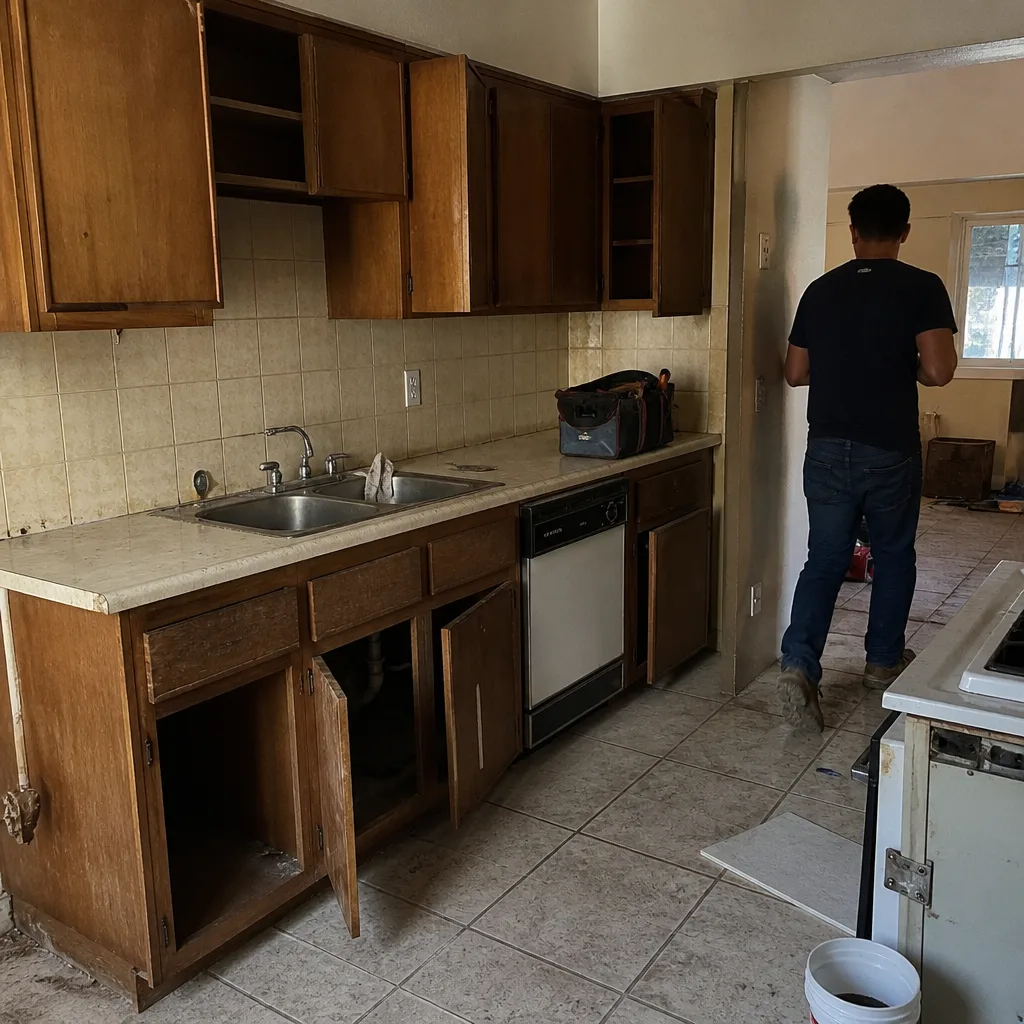 Before
 After
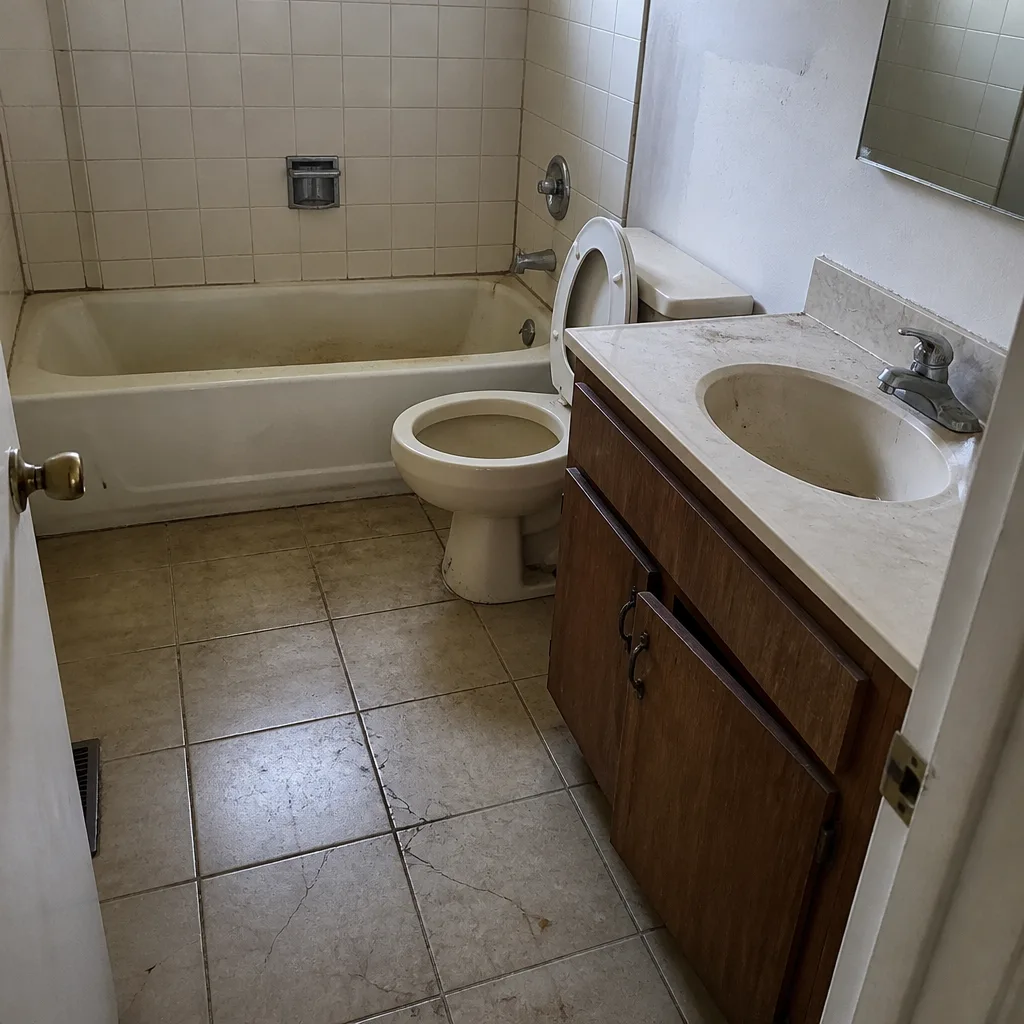 Before
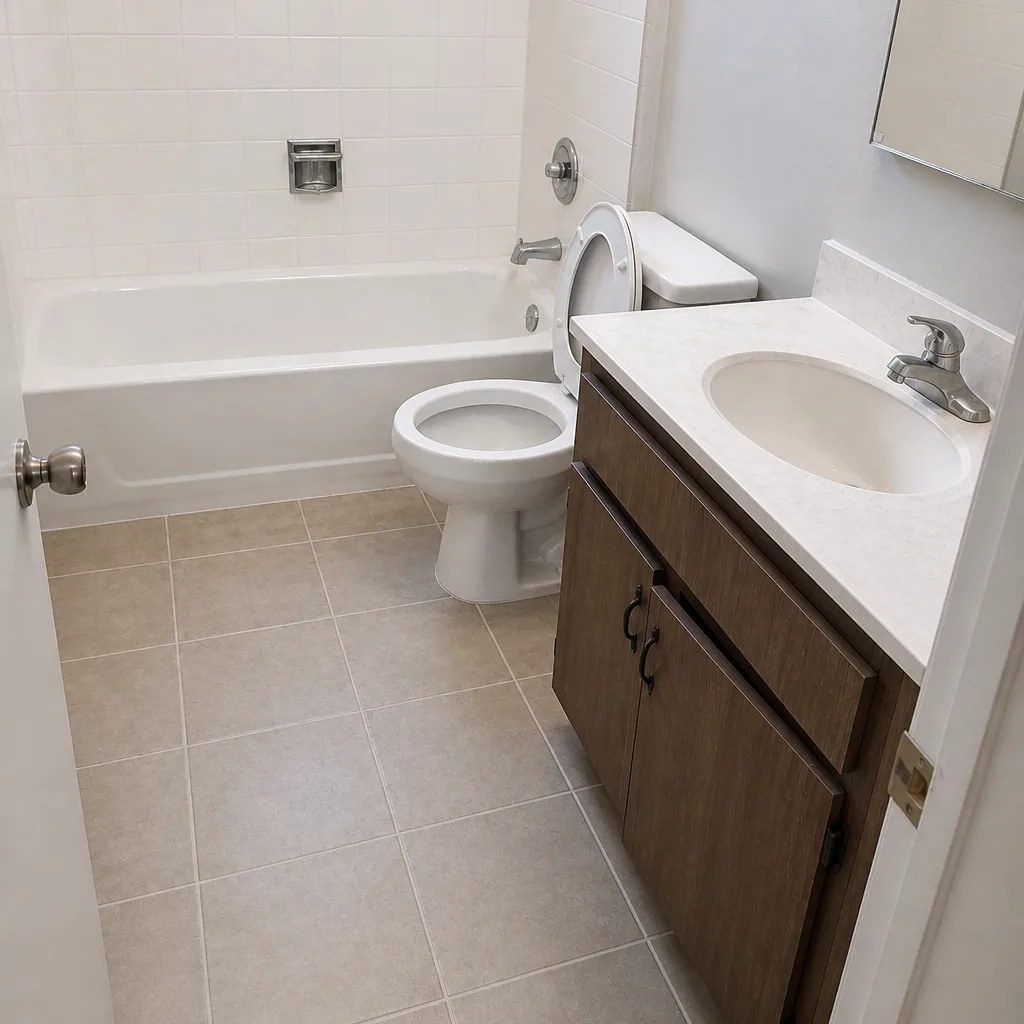 After
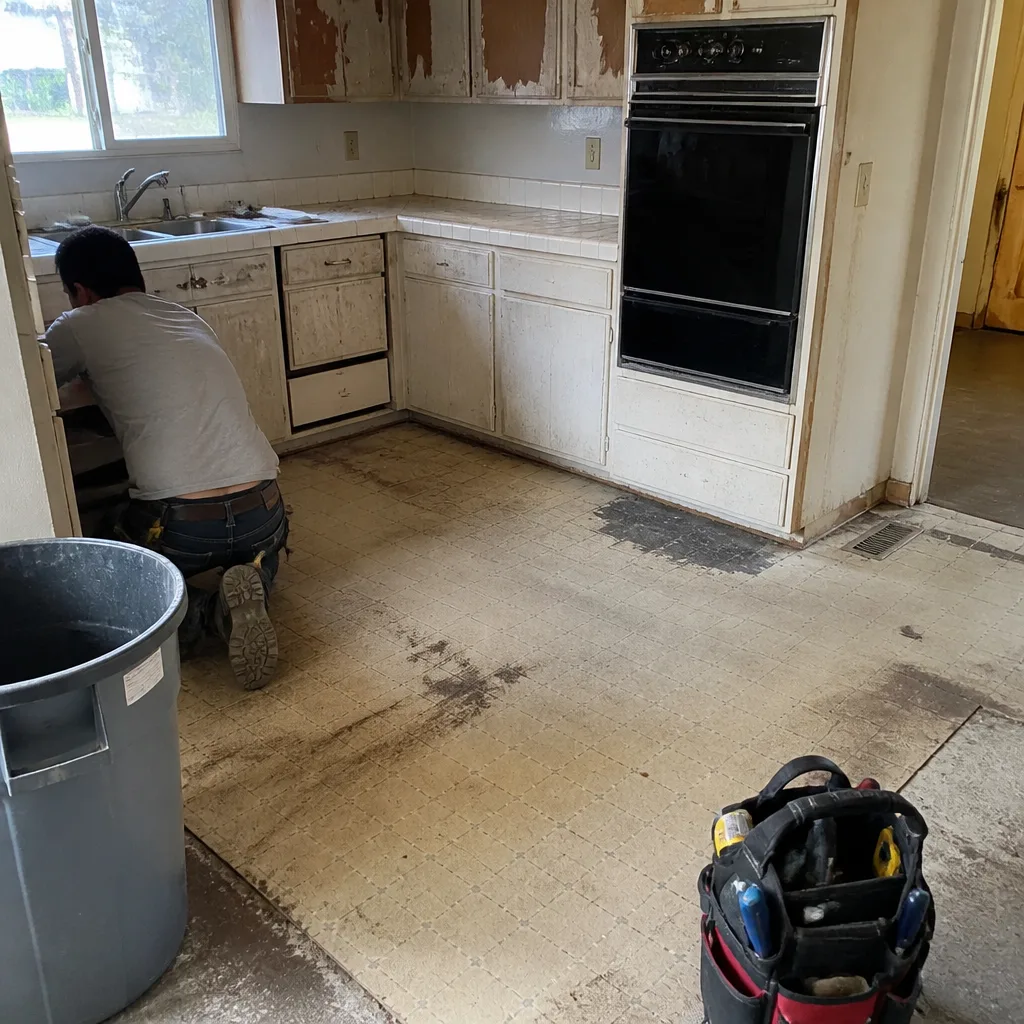 Before
 After
When to Call a Professional
Call a pro when you find any of these in combination: a musty smell that returns, a ceiling stain that spreads, a floor that deflects underfoot, a recurring crack in the same spot, or a drain connection with rust or a dark ring. Any two of those together means water has likely reached the substrate or subfloor, and that’s not a weekend repair. The structural work around joists and shower pans is where a homeowner’s good intentions turn into a bigger bill. Barrett & Sons Construction Fremont offers free estimates in Fremont – call (833) 620-6162 and we’ll walk the room with you, flashlight in hand, before anyone picks up a tool. You get a written line-item scope and a fixed price, with any change arriving as a written change order before work proceeds. If you’re comparing bids, our free second opinion on any written estimate is there for exactly this.
Frequently Asked Questions
The first sign is usually a musty smell that comes back after the room has been cleaned, often strongest near the floor or behind the toilet. That smell means moisture is trapped in a wall cavity or under the tile, and it typically shows up weeks before visible staining. If it persists, a trained eye can trace it with a flashlight and moisture readings rather than waiting for the stain to appear.
A faint ring that never changes is often old condensation, while a spreading stain with a brown tide line or a stain that darkens after every shower points to an active leak. Watch it over a week. If it grows or changes color, treat it as active and get it checked. Call (833) 620-6162 for a free estimate on the repairs.
No. A soft floor means the subfloor or joists have taken on water, and covering it with new tile just traps moisture underneath. The problem will reappear and usually costs more the second time. The right fix is to find the water source, remove the damaged material, and rebuild. A free estimate will tell you how far the damage actually goes.
No. A correctly sized fan clears a mirror within two or three minutes of a hot shower. If the mirror stays fogged, the fan is undersized for the room’s square footage, clogged, or connected to a duct that’s too long or blocked. Run the tissue test and do the CFM math for your floor area before replacing it. Call (833) 620-6162 and we’ll help you size the fan correctly.
In homes built from the 1950s through the 1970s, cast-iron drains and flanges are a frequent source of hidden leaks, especially at the toilet flange and shower drain. Rust builds from the inside out, so staining often appears long after the pipe has started to fail. A rocking toilet or a dark ring at its base is a strong reason to have it inspected before any new floor goes down.
A reputable one will pull the permit and have the work inspected on any eligible job. The permit inspector works for you, not for the contractor, and the inspection verifies the work while it’s still open. Ask to see the permit before work starts. With us, permits are pulled and inspections signed on every eligible job – call (833) 620-6162 for a free estimate.
The Bottom Line
Bathroom problems don’t hide. They whisper first, in a soft grout line, a musty smell, a stain that grows a little each week. Your job is to hear the whisper before it becomes a subfloor rebuild. The deflection test, the ceiling stain check, the lippage diagnosis, the fan CFM math, and the cast-iron drain look all take an afternoon and save months of regret. When the signs stack up, get a professional pair of eyes on it, get a written scope, and get the water stopped. That’s how a small fix stays small. If you’d rather walk the room with someone who does this every day, Barrett & Sons Construction Fremont is a phone call away. Call (833) 620-6162 to schedule your free estimate, or start with the Barrett & Sons Construction Fremont home page to see the full range of what we handle, from Driveway & Pavers in Fremont and Fence Installation in Fremont to Home Additions & ADU in Fremont. Every job comes with the written 90-Day Done Right Promise, a fixed price, and a face you’ll see again at the hardware store.
Written by the team at Barrett & Sons Construction Fremont.