Last updated November 17, 2026

Free written scope consultation - allowances, timeline, and change-order rules on paper before a single trade is scheduled
DIY vs Professional Fence Installation: What’s Safe to Do Yourself
Here’s the part nobody expects: most DIY fences in Fremont get torn out and rebuilt because of a property line dispute or a missing permit, not because the homeowner set a crooked post. The physical work is learnable. Plenty of careful people build a straight, strong fence every spring. The paperwork is where folks get burned. Walk any older Fremont block and you’ll find a fence that crosses a survey line by six inches or stands taller than the city allows, and every one of those started as a weekend project someone felt good about. This guide separates the tasks a careful homeowner handles well from the ones that create legal headaches, boundary fights, and callbacks. You’ll learn what’s genuinely safe to take on yourself, where a pro earns their keep, and how to hybrid the job without pretending.
Quick Answer
Panel installation on already-set posts, hanging a gate on an existing frame, and staining or sealing a finished fence are all reasonable DIY tasks. Post layout, property line confirmation, concrete work in Fremont’s clay-heavy soil, and permit compliance are where DIY fences most often fail. A hybrid approach, where a crew sets and aligns the posts and the homeowner takes over from there, handles the hard part while keeping costs down.
Styles & brands we work with
- Kitchen remodeling
- Bathroom remodeling
- Home additions & ADU
- Roofing
- Windows & doors
- Driveway & pavers
- Fence
Table of Contents
- Do You Actually Know Where Your Property Line Is?
- What Fremont’s Permit Rules Mean for Your Fence
- The Neighbor Conversation You Need Before Any Work Starts
- Fence Tasks That Are Genuinely Safe to Do Yourself
- Fence Tasks That Consistently Produce Problems
- Why Clay Soil Changes the Whole Calculation in Fremont
- How to Hybrid the Job Honestly
- Common Mistakes to Avoid
Do You Actually Know Where Your Property Line Is?
Before you buy a single board, you need to answer one question honestly: do you know exactly where your property line runs? Not approximately. Exactly. In neighborhoods like Centerville and Irvington, where lots were platted decades ago with fence lines that drifted over time, the “obvious” boundary is often a few inches off from the legal one. That gap doesn’t matter until a fence lands on the wrong side of it, and then it matters a great deal.
Here’s how to confirm your line before any work:
- Pull your deed and plat map from Alameda County records. They show the legal description of your lot.
- Look for existing survey markers – metal pins at the corners. They may be buried a few inches down after years of soil movement.
- If markers are missing or you can’t find them, hire a licensed land surveyor. In Fremont the cost is real, usually several hundred dollars, but it’s cheaper than a fence dispute.
- Verify against your title report. It may note easements or encroachments you don’t know about.
The gap between “I’m pretty sure” and “I know” is where most DIY fence problems begin. A surveyor’s stake is defensible. A neighbor’s handshake recollection of where the line was in 1994 is not. The physical build is the easy part of a fence; the boundary is the part that turns a weekend into a legal expense. If you’re moving into a new-to-you home in Fremont, the plat map is where you start.
What Fremont’s Permit Rules Mean for Your Fence
Fremont requires a building permit for fences that exceed certain heights – generally anything over six feet, and looser rules apply to back and side yard lines in many residential zones. A front-yard fence over three feet often requires a permit too, and some zones have stricter side-yard setbacks. The specifics depend on your zoning district and lot, which is why the first call is always to the city’s planning counter, not to a fence supplier.
Why does this matter for a DIY project? Two reasons. First, a fence built without a required permit is an unpermitted structure. When you sell your home, the buyer’s inspector will flag it, the appraiser may note it, and your title company may require it be resolved before closing. That can mean tearing it down, paying for a retroactive permit, or negotiating a credit with the buyer. Second, an unpermitted fence that crosses a property line compounds into an encroachment issue, and that is a genuinely expensive problem.
The short checklist before you dig:
- Confirm your lot’s zoning with the city of Fremont.
- Find the maximum allowed fence height for your specific line – front, side, and rear often differ.
- Ask about setback requirements. Some zones require a gap between fence and property line.
- Apply for the permit if required. The cost is modest compared to the headache of an unpermitted structure at sale time.
- Have the final inspection signed off. A documented, permitted fence adds value; an unpermitted one subtracts.
On any of our fence installation in Fremont jobs, we pull the permit and get the inspection signed – that’s standard, not an add-on. If you’re doing the work yourself, treat the permit the same way: non-negotiable.
The Neighbor Conversation You Need Before Any Work Starts
This is the step most DIYers skip, and it’s the one that matters most. Before you set a post, before you order materials, before you remove an old fence, talk to any neighbor whose property touches the fence line. Not because you need permission – the fence is on your land – but because a five-minute conversation now saves a two-year boundary dispute later.
The conversation needs three things:
- Show the plan. Walk them through where the fence will go, how tall it will be, and what material you’re using. A surprise fence is a fighting fence.
- Agree on the line. If they have any reason to think the boundary is elsewhere, you want to know now, not after concrete sets. If there’s any disagreement, get a survey before you dig.
- Put it in writing. A simple text message exchange (“Just confirming – fence goes along the existing line, 6 feet tall, cedar boards, starting Monday”) is far better than a handshake. It’s timestamped, it’s specific, and it’s evidence if anything ever comes up.
We’ve also seen fences that cross property lines because the last homeowner on either side assumed the line was somewhere it wasn’t – and in some cases the crossover didn’t surface for a decade. The neighbor conversation and a written note are what prevent that. Get it in writing. A handshake with the neighbor is a good start, but a text thread with the date and the details is what actually protects you.
Cost-sharing discussions happen here too. In Fremont, the convention on many lots is that each side pays half of the shared fence line cost, or each owns the fence on their own right side. Neither is law – it’s an agreement between neighbors. Decide it now, in writing, before materials arrive.
Fence Tasks That Are Genuinely Safe to Do Yourself
Once the posts are set, inspected, and aligned, a careful homeowner can absolutely take over the physical build. These are the tasks we’ve seen homeowners complete well:
- Panel installation on pre-set posts. If the posts are in, plumb, and at the right spacing, hanging pickets or panels is a matter of measuring, cutting, and fastening. It’s repetitive work that rewards patience, not skill.
- Hanging a gate on an existing frame. Swapping hardware or hanging a new gate leaf on a solid, square frame is a reasonable DIY job. The gate frame has to be square and the posts have to be solid – if either is off, the gate will sag no matter how good the hardware.
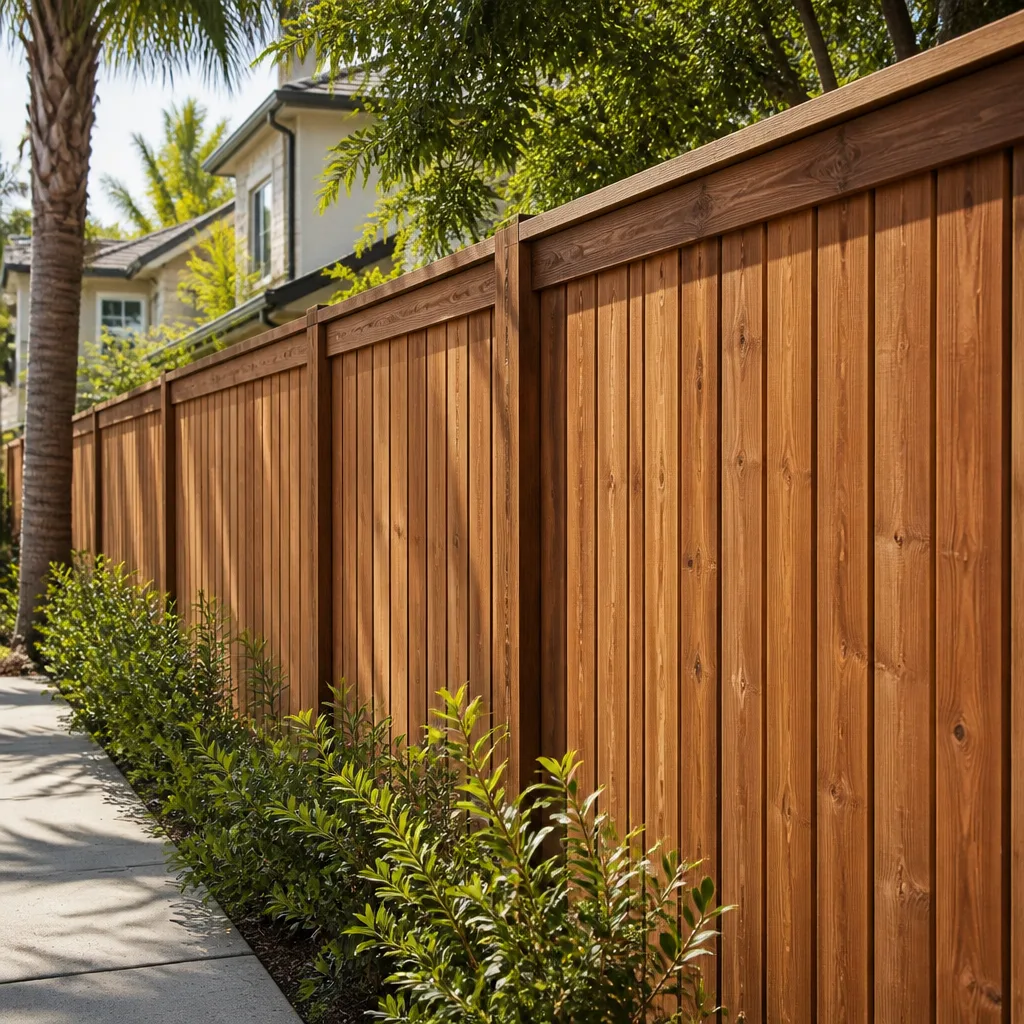
- Staining and sealing. A finished fence needs protection from the Fremont sun and winter rain. Brushing or spraying on a good stain is one of the highest-return DIY tasks you can do, and it’s near-impossible to get wrong in a way that matters.
- Replacing damaged pickets or boards. If a panel takes a hit from a fallen branch or a kid’s basketball, swapping the damaged picket is straightforward once the base structure is sound.
- Cosmetic repairs to hardware. Tightening hinges, replacing latches, re-driving loose screws – all worth doing yourself.
The line is clear: cosmetic work and assembly on a stable base is yours to do. Anything that determines where the fence sits, how it’s anchored, or whether it’s legal is where a pro pays for themselves. If you’re adding a fence as part of a larger exterior project – a new patio or landscape wall under it, for instance – the sequencing matters, and our team at Driveway & Pavers in Fremont coordinates that kind of work with fence installs regularly.
Fence Tasks That Consistently Produce Problems
Four tasks show up again and again in the fences we’re asked to rebuild:
- Post layout and alignment. Posts set four inches out of line along a 50-foot run look wrong from the start, and they can’t be corrected without pulling them out of concrete. The line has to be correct, the spacing has to account for the panel width, and the angle has to be plumb in two directions. This is where a laser level and a team of two pays off in a way a homeowner with a string line can’t replicate.
- Concrete work in clay-heavy soil. Fremont sits on soils that vary heavily from block to block – some lots drain well, others sit on expandable clay that shrinks in the dry season and swells after a heavy rain. A post hole with the wrong amount of concrete or the wrong hole depth in clay soil will heave and go out of plumb within two or three seasons. The right depth, hole width, and gravel base all depend on what’s under the dirt.
- First gate post placement on soft ground. The gate post carries more load than any other post on the fence. Set it in soft ground or without adequate concrete, and within a year the gate sags, drags, and stops latching. On a fence where the gate is the first thing guests see, that sag is the most visible sign of a bad build.
- Tying into anything structural. Fences that attach to a house, garage, or neighboring retaining wall need real design consideration. Improperly tied fences leak, transfer movement into the house, and create inspection issues.
These aren’t about skill level. They’re about physics and time. A homeowner with good tools can still end up with a post that heaves two winters after they dug it – not because they did anything obviously wrong, but because the soil needed a specific approach. If you want a sense of what proper exterior sequencing looks like, our page on Barrett & Sons Construction Fremont home walks through how we plan work that has structural and site dependencies.
Why Clay Soil Changes the Whole Calculation in Fremont
Fremont is not soil-uniform. The flatlands in Centerville and the Warm Springs area tend toward heavier clay and fill soil, while hillside lots toward Niles and Mission Peak bring their own drainage challenges. That matters for fence posts because concrete doesn’t behave the same way in every soil. In clay-heavy yards, a standard 24-inch post hole with a bag of quick-set will often heave within two seasons as the clay moves with seasonal moisture. In sandy or gravelly soil, the same approach can work fine for decades.
What actually goes into a stable post in Fremont soil:
- Hole depth determined by soil, not just fence height. The general rule is one-third of the post above ground, but clay needs extra depth to resist frost-and-moisture movement.
- Gravel drainage below the concrete. Water trapped against clay soil has nowhere to go; a few inches of gravel gives it somewhere to drain.
- Proper concrete volume. Too little and the post wobbles within a year. Too much without drainage and the concrete crack-fails from trapped moisture.
- A curing window. Posts shouldn’t be loaded until the concrete has set properly. That means planning the fence build across at least two weekends, not one.
This is where experience with local soil genuinely matters. Our crew members have up to 28 years of experience, and most of that time was spent learning what works in Fremont soil specifically. Knowing the difference between a Warm Springs post hole and a Niles post hole is not a general skill – it’s local knowledge. DIY fence installers who use a one-size approach get a fence that looks fine for a year and starts leaning in the next wet season.
How to Hybrid the Job Honestly
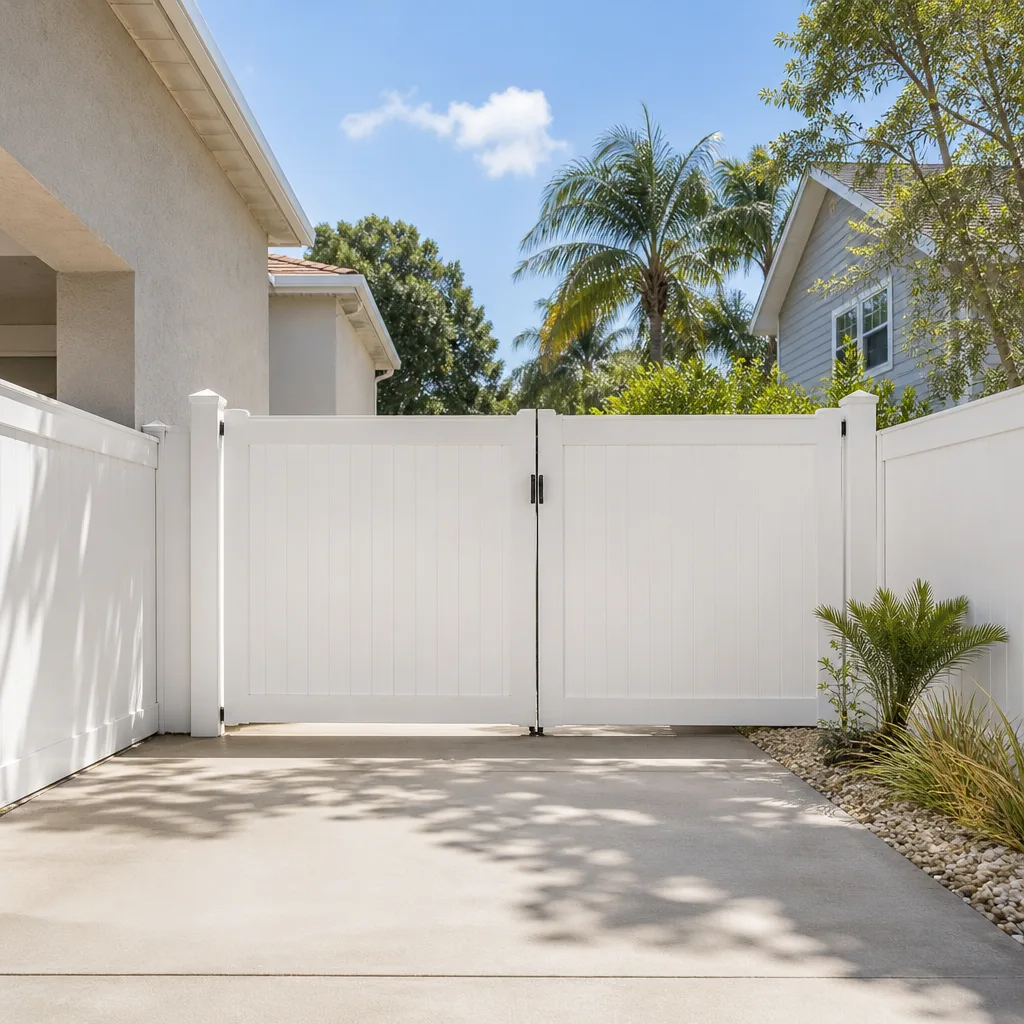
There’s a middle path that a lot of Fremont homeowners don’t know exists: split the job. We set the posts, the homeowner finishes the rest. It’s not for every project, but when it fits, it saves real money without trading away the parts that matter.
What a partial engagement typically covers:
- Property line verification and post layout. We confirm the line, mark the post positions, and lay out the run using a laser level, so the geometry is right from the start.
- Post hole digging and concrete setting. This is where the soil expertise matters. We dig to the correct depth, set the gravel base, pour the concrete, and confirm plumb and elevation.
- First gate post installation and gate frame alignment. The gate post is the highest-load post on the fence, and getting it right the first time saves a rebuild.
- Permit pull and inspection if required. The permit and inspection flow through us so the fence ends up documented and permitted.
What the homeowner can safely take over after that:
- Panel and picket installation
- Rails and stringers
- Gate leaf hanging and hardware
- Staining, sealing, and finishing
The catch is honest disclosure. A hybrid job needs a written scope that clearly defines where our work ends and yours begins – spelled out in writing before we set the first post. If a homeowner installs the panels and later wants us to fix a wobbly post, the post was ours; if a panel install fails, that’s on the homeowner side of the scope. Written scope, written boundaries. That’s the difference between a good hybrid job and a bad surprise. If the project is part of a larger build-out – a new patio, a covered structure, or an addition that changes your yard – our Home Additions & ADU in Fremont team handles the structural coordination so the fence ties in cleanly.
Common Mistakes to Avoid
- Building without confirming the property line. The most expensive fence mistake in Fremont is a fence that crosses the boundary. A surveyor’s report is a few hundred dollars; an encroachment dispute is much more.
- Skipping the permit because “the last guy didn’t need one.” Permits are cheap and inspections are simple. Unpermitted fences complicate title, closing, and future sales. Any contractor who tells you permits are optional is telling you something about themselves, not the city.
- Not writing down the neighbor agreement. A handshake is a good start. A text thread with the date, plan, and cost split is what actually protects you.
- Setting posts in clay soil with a one-size concrete approach. Warm Springs soil and Niles soil behave differently. The wrong hole depth or no drainage layer means a post that heaves within two seasons.
- Loading the posts before concrete fully cures. A fence built across one weekend often has panels hung before the concrete has properly set. The concrete loses a lot of its final strength if you rush the cure, and the post can shift.
- Hanging the gate before the frame is square. A gate on an out-of-square frame will sag no matter how good the hardware. Square the frame first, or the gate won’t latch a year from now.
- Staining before the wood has dried. Fresh pressure-treated wood is wet from the mill. Staining too soon traps moisture and the finish peels within a season.
See the difference
 Before
 After
 Before
 After
 Before
 After
When to Call a Professional
Call a pro if any of these describe your project: the property line isn’t clearly marked or is disputed, your fence will exceed the height threshold that requires a permit, the ground is clay-heavy or you’ve watched neighboring fences lean after heavy rain, the fence will include a gate or tie into any structure, or the run is long enough that getting post alignment wrong would be an expensive rebuild. Also call if you’re dealing with the neighbor conversation and want a written scope that defines the shared-line agreement – having a third party draft it in writing reduces the chance of a misunderstanding.
The physical build of a fence is a skill many homeowners can learn. The judgment calls – property line, permits, soil, gate post load – are where a pro earns their keep. Barrett & Sons Construction Fremont offers free estimates in Fremont, and the estimate includes a walk-through of the permit picture and the soil situation for your specific lot. Call (833) 620-6162 to schedule one.
Frequently Asked Questions
Yes, in many cases, especially if the property line is well-defined, the fence is under the height threshold and doesn’t require a permit, and the soil drains well. The tasks that are safest to handle yourself are panel installation on set posts, hanging a gate on an existing square frame, and staining or sealing. The tasks that most often cause problems are post layout, concrete work in clay soil, and permit compliance.
Sometimes. Fremont requires a building permit for fences over certain heights, and rules vary between front, side, and rear yard lines and between residential zones. The most reliable move is to call the city’s planning counter with your address and the fence height you’re considering before you buy materials. If you’re working with us, we pull the permit as part of the job.
DIY fence installation runs less on paper, but the difference is smaller than most people expect once you account for materials, tools you may need to rent, permit fees, and the real risk of rebuilding after a soil or alignment issue. A hybrid approach – professional posts and layout, homeowner finishes the rest – usually lands between the two on total cost while keeping the structural work correct. Call (833) 620-6162 for a line-item estimate on your specific project.
It becomes an encroachment, which is a legal problem, not just a fence problem. The neighbor can require you to remove and relocate the fence at your cost, and the issue can surface at your own home sale even years later. This is why a survey is worth the cost on any fence where the line isn’t absolutely clear. A written agreement between neighbors is helpful but doesn’t override the actual legal line.
A straightforward residential fence in Fremont is usually a one-to-three day job for a crew, though the schedule stretches longer when permits and inspections are involved or when the job crosses a weekend for concrete to cure. When we schedule a fence install, we give a realistic window including permit lead time rather than promising a one-day turnaround. Call (833) 620-6162 for a timeline on your specific lot.
Yes, and it’s a good option for a lot of homeowners. We call it a hybrid install: we handle property line verification, post layout, post digging and concrete, first gate post placement, and permit pull if required, and the homeowner takes over panels, rails, gate hanging, and finishing. The key is a written scope that spells out exactly where our work ends and yours begins.
The Bottom Line
The right question isn’t “can I install my own fence” – it’s “do I know where my property line is, what my HOA or the city allows, and what the soil under my posts is going to do in two years?” Answer those three questions and the physical work is reasonable for a careful homeowner. Skip them and even a beautifully built fence can turn into a boundary dispute or a title problem. If any of the three is unclear, bring in help – for the whole job or just for the post setting. Either way, get the scope in writing before the first shovel goes in. If you’re in Fremont and want a no-pressure walk-through of your specific lot, call (833) 620-6162 for a free estimate. We pull the permit, set the posts right, and put the whole scope on paper before any work begins.
Written by the team at Barrett & Sons Construction Fremont.